Benefits of Fish Oils

. Tuesday, 29 November 2011
0 comments

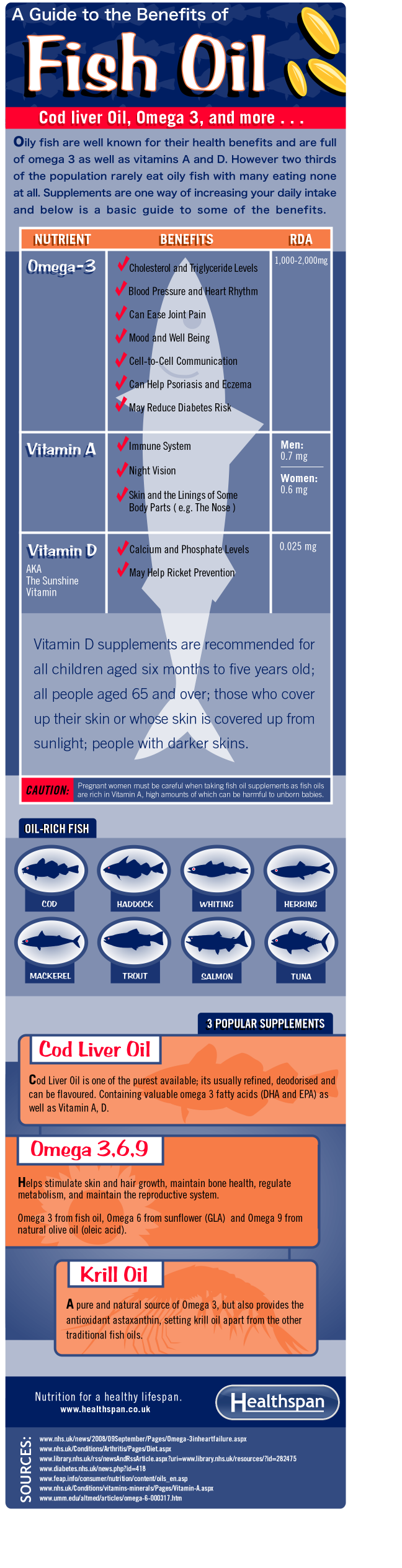
A useful guide to the benefits of fish oils. Omega oils really can change the way you look and feel according to research and so it’s no wonder health professionals recommend adding a daily boost of fish oils to your diet. Not only can fish oils help your skin appear younger, you may see improvements in conditions such as eczema and psoriasis. The ability to concentrate and feel in control of moods is enhanced. There is even strong evidence to suggest that omega 3 fish oil protects the heart and can make joints stronger and more supple.

Benefits of Omega 3 and fish oils infographic

Omega 3 - Benefits of Omega 3 and Fish Oils - Healthspan
Vitamin d - Benefits of Omega 3 and Fish Oils - Healthspan
Cod liver oil - Benefits of Omega 3 and Fish Oils - Healthspan
Omega 3 - Benefits of Omega 3 and Fish Oils - Healthspan
Krill oil - Benefits of Omega 3 and Fish Oils - Healthspan
>
By Healthspan - UK's largest direct supplier of Vitamins and Supplements

Herbal Medicines Infographic

.
0 comments

The season of over-indulgence is here so it's good to know there are herbal medicines out there that can help. Herbal medicines like milk thistle can provide a natural way to help cure an upset stomach and relieve the symptoms associated with the occasional over-indulgence of food and drink. Good to know this Christmas!

The following infographic looks at a few of the herbal medicines you can buy and how they can help with over-indulgence along with ailments and illnesses.

Guide to Herbal Medicines (THR) - infographic - Healthspan
St John's Wort - THR - Healthspan Rhodiola - THR - Healthspan
Echinacea - THR - Healthspan


By Healthspan - UK's largest direct supplier of Vitamins and Supplements

Dealing With Incontinence

. Wednesday, 29 April 2009
5 comments


There are many different kinds of incontinence issuses contrary to common belief. Here are just a few.

Stress Incontinence

Stress incontinence is the other main type of bladder control problem, which may occur in addition to overactive bladder. Stress Incontinence involves involuntary urine leakage due to poor urethral support while lifting, coughing, sneezing, or running. Women who have given birth are especially prone to stress incontinence.


Mixed Incontinence or Mixed Symptoms

Mixed Incontinence or Mixed Symptoms is the name given to a combination of stress incontinence and the symptoms of overactive bladder. Many people who experience problems with both urgency and frequency will eventually experience an urge incontinence episode or wetting accident. Urge incontinence often results in a larger amount of lost urine than stress incontinence and is often unpredictable. While a woman may be able to brace herself when she is about to laugh or cough and prevent loss of urine from stress incontinence, there is little warning with urge incontinence. There are many incontinence products available to help with these symptoms.

Urge urinary incontinence (UI)

The most common bladder problem is Urge urinary incontinence (UI) and this is the unwanted urine leakage that happens shortly after the sudden, intense desire to urinate. It is caused by involuntary bladder contractions that occur as the bladder fills. With urge UI, a person may be aware of the urge sensation but will be unable to stop leakage before getting to the toilet. Urine loss is usually in large amounts that soak underwear and even outer clothing. Sometimes an event will "trigger" the urine leakage. Some common triggers include hearing running water or what is known as the "key-in-the-door" syndrome. The anticipation of urinating can trigger a bladder spasm.
An additional symptom of overactive bladder seen very often - especially in the elderly - is nocturia, awakening more than two times at night to urinate, which will often disrupt sleep. This condition affects men and women of all ages, although its incidence increases significantly with age. Only your doctor can diagnose your bladder control problem and determine the right treatment for you, however we do have a simple test that is used by Doctors and other Healthcare professionals that you can perform at home to help you accurately determine the difference between Urge and Stress Incontinence.

Stop Smoking - Save your life and money on life insurance

. Wednesday, 11 March 2009
6 comments

March the 11th sees the 25th anniversary of No Smoking Day, a day of national recognition and support for those who want to try and give up.

Over the past 25 years the campaign has grown from an awareness day organized by a group of individuals with an interest in health, to becoming a fully registered charity in 1991, and onward to employing a full-time staff and becoming one of the best-known days of its type. In light of the ongoing global economic difficulties and the ‘credit crunch’, this year the campaign is more geared towards how smokers can save money if they give up – alongside the well-known health benefits.

So how can giving up smoking at this time help you save money?

The first financial saving to consider, is what you might save on a day to day, week to week, or year to year basis, if you were to give up smoking now. According to myfinances.co.uk, the average packet of cigarettes costs £5.67 in the UK.

If we assume that the average smoker gets through a packet a day, a week of non-smoking will save you £39.69, a month of non-smoking will save you in the region of £177.75 – yet over an entire year you will be set to save a massive £2,069.55.

It is fair to acknowledge that not everyone who wants to give up smokes £5.67 worth of cigarettes everyday, but during these times of belt-tightening and cutting back, the prospect of saving over a thousand pounds after a year of non-smoking must sound tempting to anybody.

However, savings from giving up smoking don’t stop with the cost of cigarettes. As life insurance companies become more and more competitive whilst frugal customers threaten to cancel their policies, now is the best-time for non-smokers to benefit from slashed monthly premiums in comparison to their smoking peers. Savings of up to 50 percent on payments can be made for non-smokers, whilst comparison website moneysupermarket.com estimate a 30 year-old male smoker will spend over £8,000 more on life cover than a non-smoker of the same age.

The financial benefits of giving up around the 11th March go even further though. With the growth of No Smoking Day year on year, many businesses, including supermarkets and shops, have tried to get a piece of the action. Supermarket giant, Asda are discounting prices of nicotine patches and gum in an offer to help their visitors stop at this time. It certainly seems that, in terms of saving money from stopping smoking, March 2009 may well be the perfect month to give it a try.

Coffee is Good For Hangovers and Alcohol Damage

. Wednesday, 28 January 2009
3 comments

A night out on the town...too much to drink...and the morning after needs a few cups of serious coffee. Double espresso's! That's about as far as your thought processes will take you, but when you sober up and the headache disappears, consider this new finding.

"Drinking three or more cups of coffee a day can almost halve the risk of cirrhosis of the liver, according to a Norwegian study, reported Health Media Group Media Watch Services. The protective effect applies even among alcohol drinkers, whose risk of cirrhosis is much higher. However, seven or eight cups a day provide no more protection than three (ok...so who says you can't have some pleasures in life?). Dr Tverdal, from the Norwegian Institute of Public Health in Oslo, suggests that coffee works by protecting the liver cells, since other studies have shown coffee-drinkers to have lower levels of liver enzymes - an indication of liver damage. This study agrees with others. An article published in the Archives of Internal Medicine in June 2006, shows that among more than 125,000 people studied for up to 22 years, coffee drinkers were less likely to be diagnosed with alcoholic cirrhosis."

"Was it the caffeine? No say the researchers, because this study noted that tea also contains caffeine and there was no significant decrease in cirrhosis in tea drinkers. This doesn't prove that it was coffee that reduced liver damage, and so we don't suggest you go wild, but if coffee can reduce damaging liver enzymes, then it could certainly be working in the right direction and indeed against other "unkown" damaging effects. It could be the anti-oxidants in coffee as these have been highlighted as "protective" in other plant material. So it may be best to use freshly ground coffee to avoid oxidation and possible degradation of the anti-oxidants that are thought to give coffee this healing character. An automatic coffee vending machine is simple to use and can turn beans into espresso at the push of a button."

In a world full of preservatives and other food chemicals, it's nice to know that we have a great excuse to have another cup!

Sun Safety on Holiday

. Wednesday, 14 January 2009
2 comments

You're off on holiday at last! There are so many things to remember, not least your travel insurance and your sun cream. Once you've got your trip covered, here's how to cover up in the sun...

Soaking up the sun can be really relaxing, but sun damage can lead to an increased risk of skin cancer and premature ageing. Even in the short term, sunburn can ruin your holiday - no one wants to cover up all week with painful, lobster-like skin.

How can I protect myself from sun damage?

Choose loose, cool clothing that covers you up. Wear sunglasses with UV protection and a hat to protect your face and neck. Take regular breaks in the shade and ideally keep out of the sun from 11am to 3pm.

Make wearing sun cream part of your routine. Cancer Research UK recommends a minimum of sun protection factor (SPF) 15 for most people. You don't have to buy the most expensive brand but check that your cream blocks both UVA and UVB rays. Use generous amounts, reapply after going in the water or sweating and if you're near the water, take extra care as you'll burn more easily.

When do I put my sun cream on?

Put your sun cream on at least 20-30 minutes before you go outside and reapply after 20-30 minutes in the sun and then every two hours. Always put your sun cream on before your moisturiser and make-up and don't forget the areas that are most commonly missed: your hair parting, your ears, nose, lips, feet and skin around the edges of your clothes.

Who's most at high risk from skin cancer?

People with fair skin, red or fair hair, light eyes, or a lot of moles or freckles need to take extra care in the sun. The same goes if you have a family history of skin cancer or a previous bad experience of sunburn. You might want to cover up, stay in the shade or wear sun cream that's SPF25 or more. If you notice changes to your skin or moles, speak to your GP.

Do children need extra protection?

Children have sensitive skin and need extra protection from the sun. Use SPF25 and reapply every two hours and after they've been in the sea, the pool or playing with water. Put them in loose clothing with long sleeves, preferably cotton and check shoulders, backs and necks are covered.

Hats are a must, ideally with a wide brim or a flap that covers the neck, as are sunglasses with UV filters. Babies under 12 months need to stay in the shade.

Can sun cream go off?

Eventually. Sun cream lasts for 2-3 years but check the expiry date on the bottle - you won't be protected if it's out-of-date. Keep your sun cream cool and out of direct sunlight as this can damage it.

For the ultimate relaxing holiday, get your travel insurance sorted before you go.

Buy cheap travel insurance from Post Office®; single trip and annual multi trip travel health insurance offering you comprehensive cover with a range of additional options.

Healthiest Foods and Drinks

. Tuesday, 18 November 2008
1 comments

Here is a list of the healthiest foods that you can eat and the power they can provide.

Apricots
The Power: Beta-carotene, which helps prevent free-radical damage and protect the eyes. The body also turns beta-carotene into vitamin A, which may help ward off some cancers, especially of the skin. One apricot has 17 calories, 0 fat, 1 gram of fiber. Snacks on them dried, or if you prefer fresh, buy when still firm; once they soften, they lose nutrients.

Avocados
The Power: Oleic acid, an unsaturated fat that helps lower overall cholesterol and raise levels of HDL, plus a good dose of fibre. One slice has 81 calories, 8 grams of fat and 3 grams of fibre. Try a few slices instead of mayonnaise to dress up your next burger.

Raspberries
The Power: Ellagic acid, which helps stall cancer-cell growth. These berries are also packed with vitamin C and are high in fiber, which helps prevent high cholesterol and heart disease. A cup has only 60 calories, 1 gram of fat and 8 grams of fiber. Top plain low-fat yogurt or oatmeal (another high fiber food) with fresh berries.

Cantaloupe
The Power: Vitamin C (117mg in half a melon, almost twice the recommended daily dose) and beta-carotene - both powerful antioxidants that help protect cells from free-radical damage. Plus, half a melon has 853mg of potassium - almost twice as much as a banana, which helps lower blood pressure. Half a melon has 97 calories, 1 gram of fat and 2 grams of fiber. Cut into cubes and freeze, then blend into an icy smoothie.

Cranberry Juice
The Power: Helps fight bladder infections by preventing harmful bacteria from growing. A cup has 144 calories, 0 grams of fat and 0 fibre. Buy 100 percent juice concentrate and use it to spice up your daily H20 without adding sugar.

Tomato
The Power: Lycopene, one of the strongest carotenoids, acts as an antioxidant. Research shows that tomatoes may cut the risk of bladder, stomach and colon cancers in half if eaten daily. A tomato has 26 calories, 0 fat and 1 gram of fibre. Drizzle fresh slices with olive oil, because lycopene is best absorbed when eaten with a little fat.

Raisins

The Power: These little gems are a great source of iron, which helps the blood transport oxygen and which many women are short on. A half-cup has 218 calories, 0 fat and 3 grams of fibre. Sprinkle raisins on your morning oatmeal or bran cereal - women, consider this especially during your period.

Figs
The Power: A good source of potassium and fibre, figs also contain vitamin B6, which is responsible for producing mood-boosting serotonin, lowering cholesterol and preventing water retention. The Pill depletes B6, so if you use this method of birth control, make sure to get extra B6 in your diet. One fig has 37 to 48 calories, 0 fat and 2 grams of fibre. (Cookie lovers - fig bars have around 56 calories, 1 gram of fat and 1 gram of fibre per cookie). Fresh figs are delicious simmered alongside a pork tenderloin and the dried variety make a great portable gym snack.

Lemons/Limes
The Power: Limonene, furocoumarins and vitamin C, all of which help prevent cancer. A wedge has 2 calories, 0 fat and 0 fibre. Buy a few of each and squeeze over salads, fish, beans and vegetables for fat free flavour. See also: Beneficial Bytes: Lemons and Limes.
Vegetables

Onions
The Power: Quercetin is one of the most powerful flavonoids (natural plant antioxidants). Studies show it helps protect against cancer. A cup (chopped) has 61 calories, 0 fat and 3 grams of fibre. Chop onions for the maximum phytonutrient boost, or if you hate to cry, roast them with a little olive oil and serve with rice or other vegetables.

Artichokes
The Power: These odd-looking vegetables contain silymarin, an antioxidant that helps prevent skin cancer, plus fibre to help control cholesterol. One medium artichoke has 60 calories, 0 fat and 7 grams of fibre. Steam over boiling water for 30 to 40 minutes. Squeeze lemon juice on top, then pluck the leaves off with your fingers and use your teeth to scrape off the rich-tasting skin. When you get to the heart, you have found the best part!

Ginger
The Power: Gingerols may help reduce queasiness; other compounds may help ward off migraines and arthritis pain by blocking inflammation-causing prostaglandins. A teaspoon of fresh gingerroot has only 1 calorie, 0 fat and 0 fibre. Peel the tough brown skin and slice or grate into a stir-fry.

Broccoli
The Power: Indole-3-carbinol and sulforaphane, which help protect against breast cancer. Broccoli also has lots of vitamin C and beta-carotene. One cup (chopped) has 25 calories, 0 fat and 3 grams of fibre. Don't overcook broccoli - instead, microwave or steam lightly to preserve phytonutrients. Squeeze fresh lemon on top for a zesty and taste, added nutrients and some vitamin C.

Spinach
The Power: Lutein and zeaxanthin, carotenoids that help fend off macular degeneration, a major cause of blindness in older people. Plus, studies show this green fountain of youth may help reverse some signs of aging. One cup has 7 calories, 0 fat and 1 gram of fibre. Add raw leaves to a salad or sauté with a little olive oil and garlic.

Bok Choy (Chinese cabbage)
The Power: Brassinin, which some research suggests may help prevent breast tumors, plus indoles and isothiocyanates, which lower levels of estrogen, make this vegetable a double-barreled weapon against breast cancer. A cup will also give you 158mg of calcium (16 percent of your daily recommended requirement) to help beat osteoporosis. A cup (cooked) has 20 calories, 0 fat and 3 grams of fibre. Find it in your grocer's produce section or an Asian market. Slice the greens and juicy white stalks, then saute like spinach or toss into a stir-fry just before serving.

Squash (Butternut, Pumpkin, Acorn)
The Power: Winter squash has huge amounts of vitamin C and beta-carotene, which may help protect against endometrial cancer. One cup (cooked) has 80 calories, 1 gram of fat and 6 grams of fiber. Cut on in half, scoop out the seeds and bake or microwave until soft, then dust with cinnamon.

Watercress and Arugula
The Power: Phenethyl isothiocyanate, which, along with beta-carotene and vitamins C and E, may help keep cancer cells at bay. One cup has around 4 calories, 0 fat and 1 gram of fiber. Do not cook these leafy greens; instead, use them to garnish a sandwich or add a pungent, peppery taste to salad.

Garlic
The Power: The sulfur compounds that give garlic its pungent flavor can also lower LDL ("bad") cholesterol, lower blood pressure and even reduce your risk of stomach and colon cancer. A clove has 4 calories, 0 fat and 0 fibre. Bake a whole head for 15 to 20 minutes, until soft and sweet and spread on bread instead of butter.

Quinoa

The Power: A half cup of cooked quinoa has 5 grams of protein, more than any other grain, plus iron, riboflavin and magnesium. A half-cup has 318 calories, 5 grams of fat and 5 grams of fibre. Add to soup for a protein boost. Rinse first, or it will taste bitter.

Wheat Germ
The Power: A tablespoon gives you about 7 percent of your daily magnesium, which helps prevent muscle cramps; it is also a good source of vitamin E. One tablespoon has 27 calories, 1 gram of fat and 1 gram of fibre. Sprinkle some over yogurt, fruit or cereal.

Lentils
The Power: Isoflavones, which may inhibit estrogen-promoted breast cancers, plus fibre for heart health and an impressive 9 grams of protein per half cup. A half-cup (cooked) has 115 calories, 0 fat and 8 grams of fibre. Isoflavones hold up through processing, so buy lentils canned, dried or already in soup. Take them to work, and you will have a protein packed lunch.

Peanuts
The Power: Studies show that peanuts or other nuts (which contain mostly unsaturated "good" fat) can lower your heart-disease risk by over 20 percent. One ounce has 166 calories, 14 grams of fat and 2 grams of fibre. Keep a packet in your briefcase, gym bag or purse for a protein-packed post-workout nosh or an afternoon pick me up that will satisfy you until supper, or chop a few into a stir-fry for a Thai accent. See also: The Nut Case

Pinto Beans
The Power: A half cup has more than 25 percent of your daily requirement of folate, which helps protect against heart disease and reduces the risk of birth defects. A half-cup (canned) has 103 calories, 1 gram of fat and 6 grams of fibre. Drain a can, rinse and toss into a pot of vegetarian chilli.

Yogurt
The Power: Bacteria in active-culture yogurt helps prevent yeast infections; calcium strengthens bones. A cup has 155 calories, 4 grams of fat, 0 grams of fibre. Get the plain kind and mix in your own fruit to keep calories and sugar down. If you are lactose intolerant, never fear - yogurt should not bother your tummy.

Skim Milk
The Power: Riboflavin (a.k.a. vitamin B2) is important for good vision and along with vitamin A might help improve eczema and allergies. Plus, you get calcium and vitamin D, too. One cup has 86 calories, 0 fat and 0 fibre. If you are used to high fat milk, don't go cold turkey; instead, mix the two together at first. Trust this fact: In a week or two you won't miss it!
Seafood

Shellfish (Clams, Mussels)

The Power: Vitamin B12 to support nerve and brain function, plus iron and hard-to-get minerals like magnesium and potassium. Three ounces has 126 to 146 calories, 2 to 4 grams of fat and 0 fibre. Try a bowl of tomato-based (and low fat) Manhattan clam chowder.

Salmon
The Power: Cold-water fish like salmon, mackerel and tuna are the best sources of omega-3 fatty acids, which help reduce the risk of cardiac disease. A 3-ounce portion (cooked) has 127 calories, 4 grams of fat, 0 fibre. Brush fillets with ginger-soy marinade and grill or broil until fish flakes easily with a fork.

Crab
The Power: A great source of vitamin B12 and immunity-boosting zinc. A 3-ounce portion has 84 calories, 1 gram of fat, 0 fibre. The "crab" in sushi is usually made from fish; buy it canned instead and make your own crab cakes.